
Indefinite Leave to Remain (ILR): Expert Guidance from London Immigration Law Specialists
Your permanent UK settlement, prepared to get it right first time.
Trusted Visa & Immigration Experts
Unlocking Your Pathway to the UK
ILR Strategy
Settlement advice based on your visa route, residence and eligibility.
Strategic Advisors for UK Success
Guidance from Application to Ambition
Personalised UK Solutions
Unlocking Potential for Individuals & Ventures
Table of Content
- Indefinite Leave to Remain (ILR)
- Key facts
- What Indefinite Leave to Remain means for you
- The 2026 settlement changes: what is confirmed, and what is only proposed
- How to qualify for ILR: the main routes
- The core requirements every ILR application must meet
- Fees and processing times
- What commonly goes wrong
- The benefits of indefinite leave to remain (ILR)
- How Conroy Baker’s Immigration Law Specialists help
- Recent ILR outcomes
- Our Common Client’s Questions (FAQ’s)
Indefinite Leave to Remain (ILR)
Indefinite Leave to Remain (ILR) is how you settle permanently in the UK. It gives you the right to live, work and study here with no time limit, to apply for public funds where eligible, and to use as the basis for British citizenship. It is also called “settlement”.
As at 21 July 2026, the existing 3-year, 5-year and 10-year routes to settlement remain fully in force, and every application is decided under the Immigration Rules in place on the day you apply. The Government has confirmed it intends to move to a contribution-based “earned settlement” model later in 2026, but no rules bringing that in have yet been laid before Parliament. Below is the current position, route by route, with the confirmed 2026–2027 changes set out plainly.
Key facts
(as at 21 July 2026)
- What it is: permanent settlement – live, work and study in the UK free of immigration conditions, and the usual step before citizenship.
- Standard qualifying period: usually five years’ continuous residence on work and family routes; three years on Innovator Founder and Global Talent; ten years on the long residence route.
- Absences: on most routes, no more than 180 days outside the UK in any rolling 12-month period.
- Knowledge requirements: pass the Life in the UK Test and meet the English language standard (currently B1, rising to B2 for many routes from 26 March 2027).
- Fee: £3,226 per person (8 April 2026 schedule); priority £500 and super priority £1,000 extra; the Immigration Health Surcharge is not charged on ILR.
- Decision time: usually up to six months on the standard service, faster on priority where available.
- Adviser: Conroy Baker Ltd is an IAA-regulated (formerly OISC) practice, Ref F202200094.
What Indefinite Leave to Remain means for you
Indefinite Leave to Remain removes the conditions attached to your visa. You no longer extend your leave, pay for further visa applications, or depend on a sponsor. You can change employer freely, start or run a business, and access public services and benefits on the same basis as a settled resident.
Settlement is not the same as citizenship. You keep your current nationality and cannot yet hold a British passport. Most people apply for naturalisation after holding ILR for at least 12 months, provided they meet the residence and good character rules. A child born in the UK to a parent who already holds ILR is generally a British citizen automatically at birth.
Settlement can also be lost. Under Home Office guidance, your ILR lapses automatically if you spend two or more years in a row outside the UK, Ireland and the Crown Dependencies. If that happens, you need a Returning Resident visa to come back and settle again. This is one of the most common ways people lose a status that took years to earn.
The 2026 settlement changes: what is confirmed, and what is only proposed
There is a lot of noise about settlement rules changing, and much of the online commentary is wrong. Here is the precise position, because it changes real decisions about when to apply.
Confirmed and dated – the English language increase. A Statement of Changes laid before Parliament on 5 March 2026 (HC 1691) confirmed that the English language requirement for settlement rises from B1 to B2 on the CEFR scale – broadly A-level standard – from 26 March 2027. It applies across a wide range of routes, including Skilled Worker, Global Talent, Scale-up, Innovator Founder, UK Ancestry, Long Residence, Bereaved Partner and Settlement Family Life, and it applies to people already on a pathway to settlement. If your English is around the current minimum, prepare for this now.
Proposed, but not yet law – the ten-year qualifying period. The Government’s May 2025 immigration white paper proposed raising the standard qualifying period from five years to ten for most routes, under an “earned settlement” model where time can be shortened by contribution or lengthened by poor compliance. A public consultation ran from November 2025 and closed on 12 February 2026, drawing more than 200,000 responses. Ministers have confirmed the intention to proceed and pointed to autumn 2026, and the consultation proposed that a longer period could apply to people already in the UK who have not yet settled.
What that means today. No Immigration Rules introducing a ten-year baseline have been laid, and the formal consultation response has not been published. The five-year and ten-year routes still apply. Transitional protection for people part-way through a five-year route has not been confirmed. If you are within about a year of completing your qualifying period, there is a strong practical case for applying as soon as you are eligible rather than waiting for the rules to settle – a timing decision worth taking advice on.
Not sure whether you qualify yet? Book an appointment for a consultation with our experts to determine if you are eligible to apply for indefinite leave to remain in the UK.
How to qualify for ILR: the main routes
There is no single Indefinite Leave to Remain application. The route you settle under depends on the visa you have held, and each route sets its own qualifying period and evidence. These are the routes we handle most often.
Three-year accelerated routes for founders and talent
Founders on the Innovator Founder route, and people on the Global Talent route, can reach settlement after three years where they meet the route’s criteria, rather than waiting five. For founders, the application is as much about business evidence as immigration rules, which is where combining immigration and business advisory expertise matters. See our Innovator Founder visa service.
Five-year employment based and family route
Most sponsored workers settle after five years of continuous lawful residence. This is the route for Skilled Worker visa holders, and for International Sportsperson and former Tier 2 holders. The application turns on your residence record, meeting any salary requirement for your route, and staying within the absence limits across the whole five years.
See our Skilled Worker visa service for how sponsorship and settlement connect.
The ten-year long residence route
If you have lived in the UK lawfully for ten continuous years – often across several visa types – you may qualify under the long residence route. This route is unforgiving on gaps: a period of overstaying or a break in lawful status can reset the clock. A careful audit of your history is essential, and our guide to the ten-year long residence route explains how the count works.
Other routes to ILR
Settlement is also available on several further routes, each with its own rules: five years on a UK Ancestry visa for Commonwealth citizens, five years on a British National (Overseas) visa, the private life route, and routes for refugees, armed forces personnel and returning residents. If you have switched between categories, our guide to switching visas on the way to ILR shows how residence carries across.
For a fuller breakdown, see our guide to ILR eligibility routes.
The core requirements every ILR application must meet
Whatever your route, a common set of requirements decides most applications. Each is a frequent reason for refusal when handled loosely.
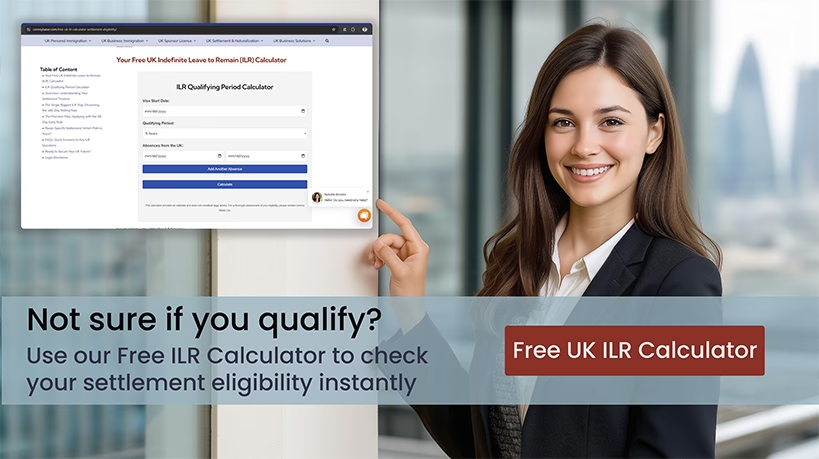
- Continuous residence and the 180-day rule. On most routes you must not spend more than 180 days outside the UK in any rolling 12-month period. It is counted on a rolling basis, not per calendar year, and applicants who count it wrongly are caught out. Our free ILR absence calculator checks this against your real travel dates.
- Life in the UK Test. You must pass this before you apply. Book it early – a failed test close to your application date can derail your timing. See our Life in the UK Test guide.
- English language. You must meet the required standard, currently B1 for most routes and rising to B2 for many from 26 March 2027.
- Suitability and good character. A criminal record in the UK or abroad, giving false or incomplete information, or having broken immigration law can all lead to refusal. If anything in your history is uncertain, raise it before you apply, not after.
- Financial and route-specific requirements. Some routes require you to show you can support yourself and your dependants, or to meet a salary threshold. Check what your specific route demands before you file.
Fees and processing times
The ILR application fee is £3,226 per person, based on the fee schedule that took effect on 8 April 2026. A priority decision costs around £500 more, and a super priority (next-working-day) decision around £1,000 more, where those services are available. Biometric enrolment is £19.20. The Immigration Health Surcharge is not charged on ILR. Home Office fees change regularly, so confirm the current figures on the official GOV.UK settlement pages before you budget.
A standard decision usually takes up to six months, with faster options at additional cost. One point catches people out: if your application is refused, the Home Office application fee is generally not refunded. That is the strongest reason to get the application right first time rather than treating a refusal as a free second attempt. You can normally submit up to 28 days before you complete your qualifying period – applying earlier than that risks refusal.
Our 2026 updated guide to ILR fees and processing times.
What commonly goes wrong
Most refusals we see are not close calls on the law. They are avoidable problems in preparation. The recurring ones are worth naming plainly:
- Absences counted incorrectly, especially where travel was for work and the applicant assumed it was exempt.
- A hidden gap in lawful status, often from a late extension years earlier, which surfaces only when the full history is reviewed.
- Applying under the wrong route, or a few weeks before eligibility is actually met.
- Unresolved suitability issues disclosed too late to be addressed properly.
- Weak evidence on relationship, residence, salary or business criteria that looked sufficient to the applicant but not to a caseworker.
The pattern is consistent: the form is rarely the problem. The evidence behind it, and the timing, decide the outcome.
The benefits of indefinite leave to remain (ILR)
Settlement changes your relationship with the UK from temporary to permanent. Once you hold ILR, the main practical benefits are:
- No time limit and no more visas. You can live, work and study in the UK for as long as you like, without renewing your leave or paying for further applications.
- Freedom to work for anyone. You are no longer tied to a sponsor and can change employer, become self-employed, or start a business without immigration restrictions.
- Access to public funds. Settled residents can apply for benefits and support where they are otherwise eligible.
- A route to British citizenship. ILR is the usual step before naturalisation, which most people can apply for after holding settlement for at least 12 months.
- Security for your family. A child born in the UK to a parent who holds ILR is generally a British citizen automatically at birth, and settled status gives your household long-term stability.
- No Immigration Health Surcharge. Settled residents do not pay the surcharge that applies to most time-limited visas.
One caveat worth knowing: settlement is permanent but not indestructible. It lapses if you spend two or more years in a row outside the UK, so protecting it matters as much as securing it.
How Conroy Baker’s Immigration Law Specialists help
Settlement is the end of a long journey, and the stakes are high. As IAA-regulated Immigration Law Specialists, our role is to make sure years of lawful residence are not undone by a preventable error in the final application.
We start by auditing your full immigration history – every entry, exit, visa and gap – and testing it against the route you intend to use. We identify risks early, prepare the evidence to the standard a caseworker expects, and advise on timing, including whether to apply now in light of the proposed 2026 changes.
This is work a firm combining immigration and business expertise is built for. The examples below show how that planning turns a visa into settled status.
Recent ILR outcomes
This is work a firm combining immigration and business expertise is built for. The examples below show how that planning turns a visa into settled status.
From Innovator Founder visa to permanent settlement
 An entrepreneur from Europe came to Conroy Baker wanting to build an innovative business in the UK and, in time, settle here permanently. The Innovator Founder visa can lead to Indefinite Leave to Remain (ILR), but only where the founder keeps meeting the route’s requirements and maintains eligibility across the qualifying period before applying. Conroy Baker planned the visa pathway, supported ongoing immigration compliance, and prepared the client for settlement well ahead of the qualifying date. The founder established the business and progressed to permanent settlement. The example shows how early, structured planning can turn a business visa into a realistic route to ILR.
From spouse visa to Indefinite Leave to Remain
A family settlement applicant asked Conroy Baker to help them move from a spouse visa to permanent settlement. Progressing from a family visa to ILR depends on meeting the continuous residence and eligibility requirements across the qualifying period, supported by documentation that stands up to Home Office scrutiny. Conroy Baker assessed the client’s eligibility, mapped the settlement timeline, and built a documentation strategy to evidence both the relationship and the residence history. The applicant progressed to ILR and secured long-term UK residency. It is a useful example of how careful preparation supports a strong family settlement application.
Give your settlement application the best possible footing. Book a consultation with our IAA-regulated advisers and have your eligibility, absences and timing reviewed before you apply. You can also explore related routes across our UK settlement and naturalisation pages, or read about the next step in our British citizenship and naturalisation service.
Our Common Client’s Questions (FAQ’s)
Have your ILR eligibility checked before you apply.
Tell us your route, how long you have been in the UK, and any long absences, and one of our IAA-regulated advisers will review whether you are ready to apply for settlement –
and flag anything that could put an application at risk.
There is no obligation, and we will not share your details with anyone else.

Written by Hemang Laaheru
This page is written by Hemang Laaheru, an IAA-regulated immigration adviser at Conroy Baker Ltd (IAA, formerly OISC, Ref F202200094, Level 1), specialising in UK settlement and business immigration. Sources: GOV.UK settlement guidance and Statement of Changes HC 1691.
Last updated: 12 July 2026
This page is general information about UK immigration law, current as at 21 July 2026. Immigration rules change frequently, and older content may no longer reflect the current position. It is not legal advice and does not create a client relationship. For advice on your circumstances, book a consultation with our regulated team.
UK Immigration News Blogs
Find out the most recent information about UK immigration laws, news, and other important changes.